
VW eco up Boot Dimensions in cm
Model information
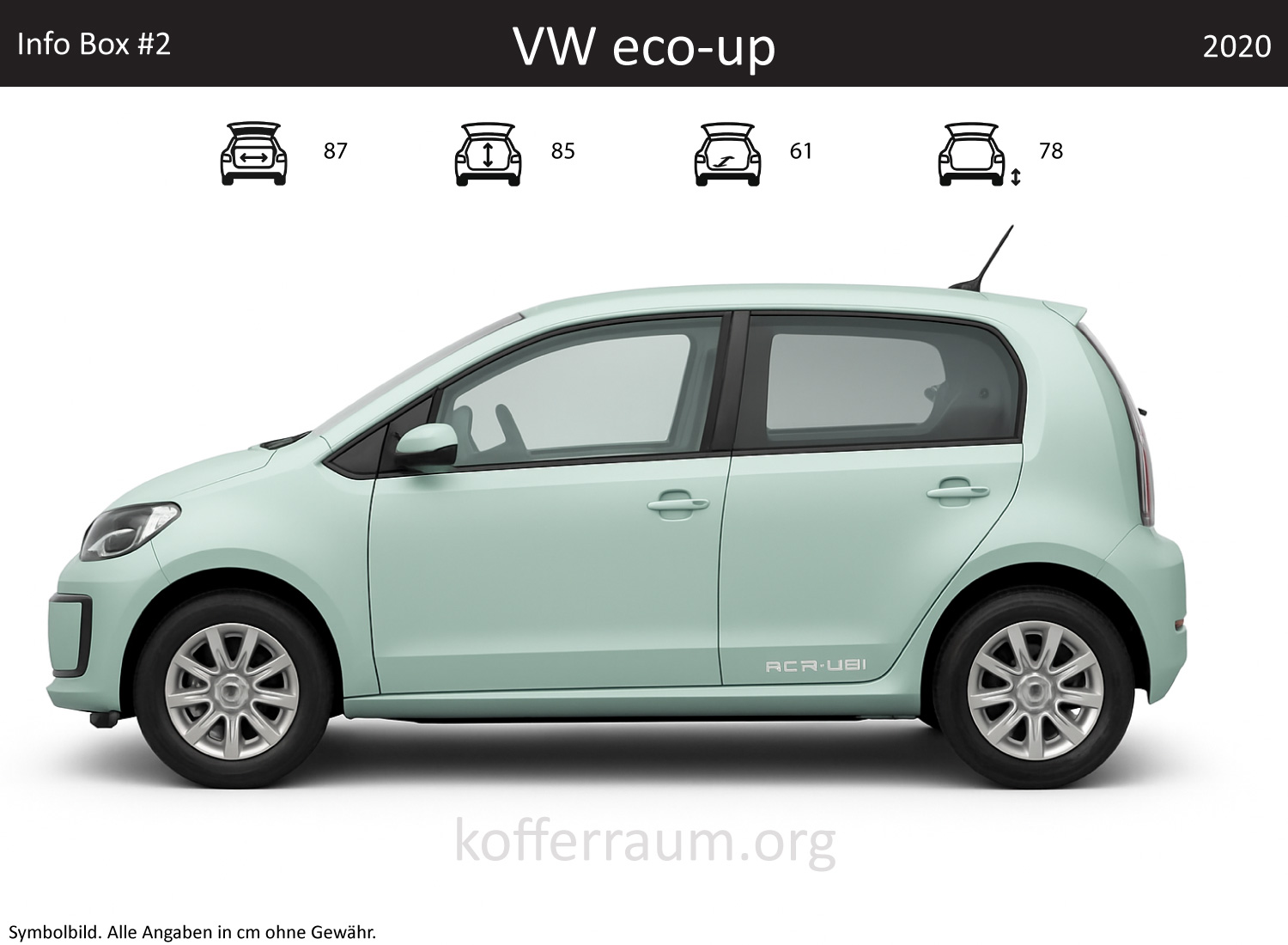
The VW eco-up is a city car designed specifically for environmentally conscious drivers. It is based on Volkswagen’s Up! platform and is characterised by its compact build and efficient propulsion technology. The eco-up is offered with a natural gas drivetrain, making it an environmentally friendly option for urban driving. The focus is on low fuel consumption and low emissions, without compromising on comfort and functionality.
Variants of the same range
The VW eco-up is part of the Up! range, which includes several variants. These include the classic Up! hatchback and the Up! GTI, which is geared more towards sportiness. It is important not to confuse these models, as they offer different performance characteristics and equipment. The eco-up stands out with its specific natural gas drivetrain, while the other variants focus on petrol power or sporty performance.
Boot capacity
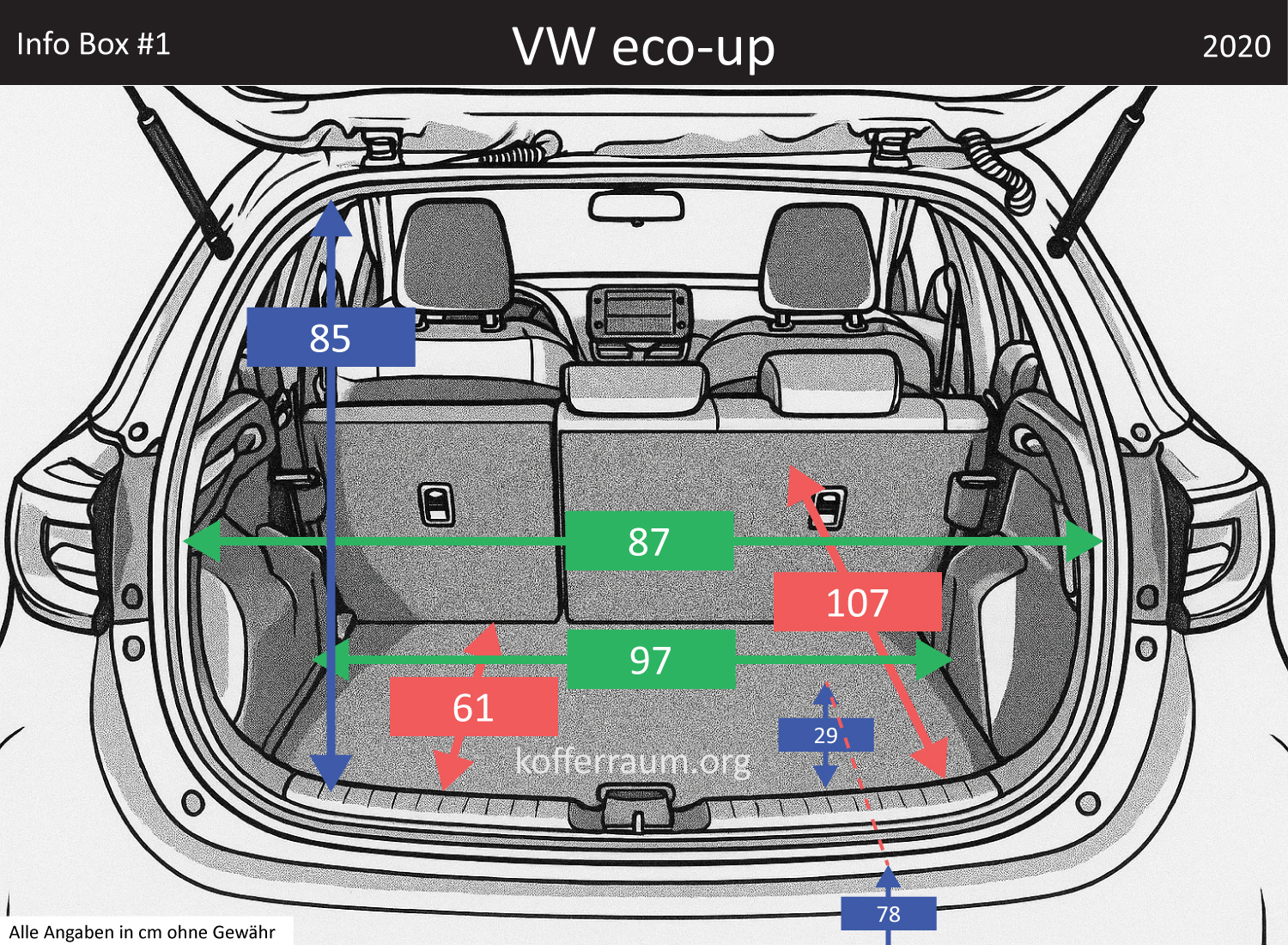
The boot of the VW eco-up offers a capacity of around 251 litres, which is respectable for a city car of this class. The rear seats fold down, allowing the load volume to be expanded to up to 951 litres. This enables flexible use of the boot space, whether for shopping, luggage or other transport needs. The boot opening is generously sized, which makes loading easier.
Model year differences
The VW eco-up has been continually developed since its introduction in 2013. Significant changes affecting the body and boot dimensions occurred in 2016, when the model received a facelift. These updates included both cosmetic adjustments and technical improvements, which did not result in significant changes to boot capacity. The basic structure and the boot design remained largely unchanged.
Direct rivals
In the same price band and size, models such as the Skoda Citigo and the Seat Mii can be found. The Skoda Citigo also offers a boot capacity of around 251 litres, while the Seat Mii has similar dimensions. Differences in boot capacity are minimal, but interior layouts and equipment can vary, which can affect how the boot is used.
More affordable alternatives
More affordable alternatives with similar boot dimensions include the Dacia Sandero and the Hyundai i10. The Dacia Sandero offers a boot capacity of up to 320 litres, making it an attractive option, while the Hyundai i10 offers around 252 litres of boot space. These models offer good value for money and are of interest to buyers who value practicality and low running costs.
All information on this site is provided without warranty, and no liability is accepted for its accuracy or completeness.