
Nissan Juke Boot Dimensions in cm
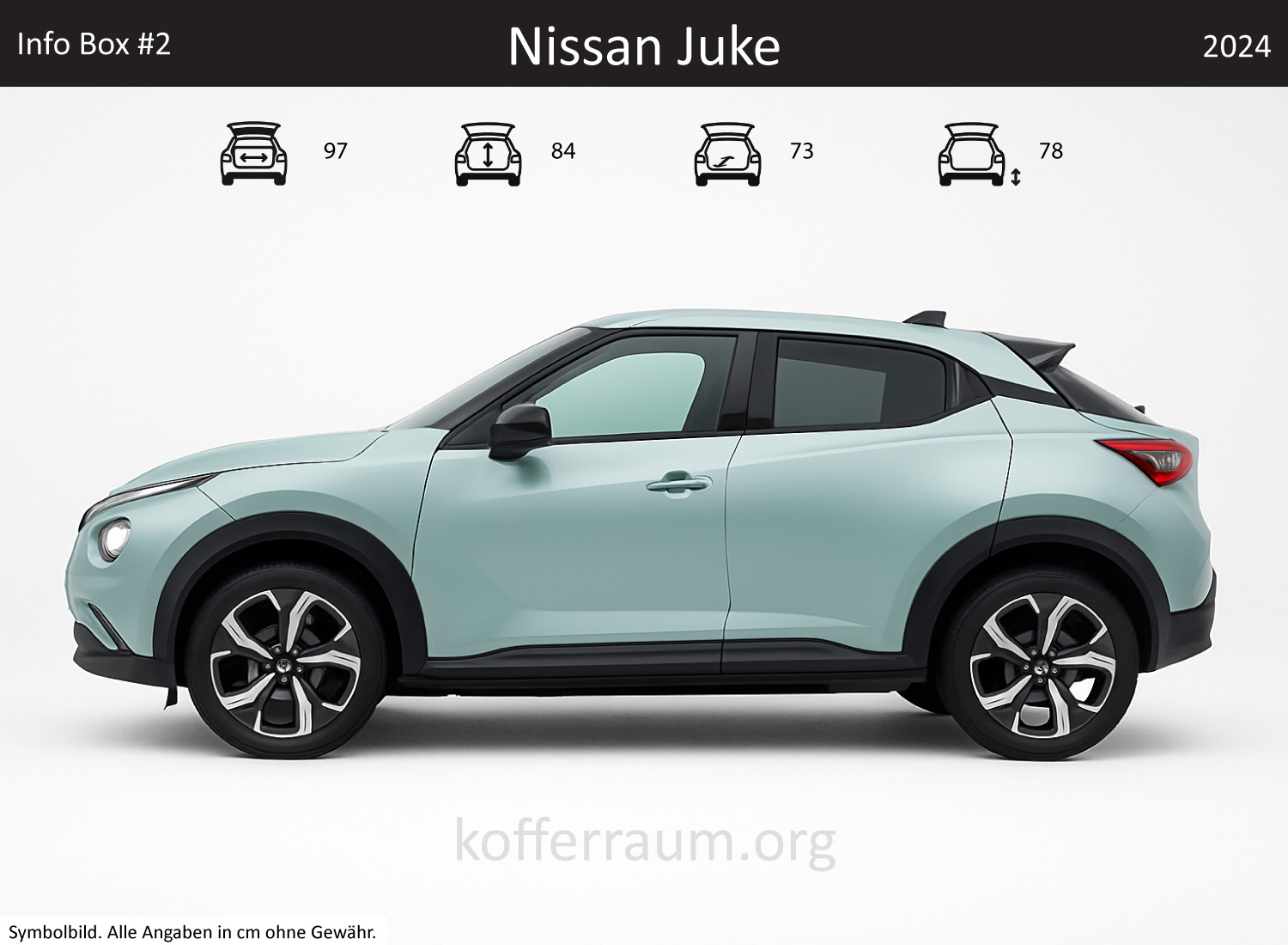
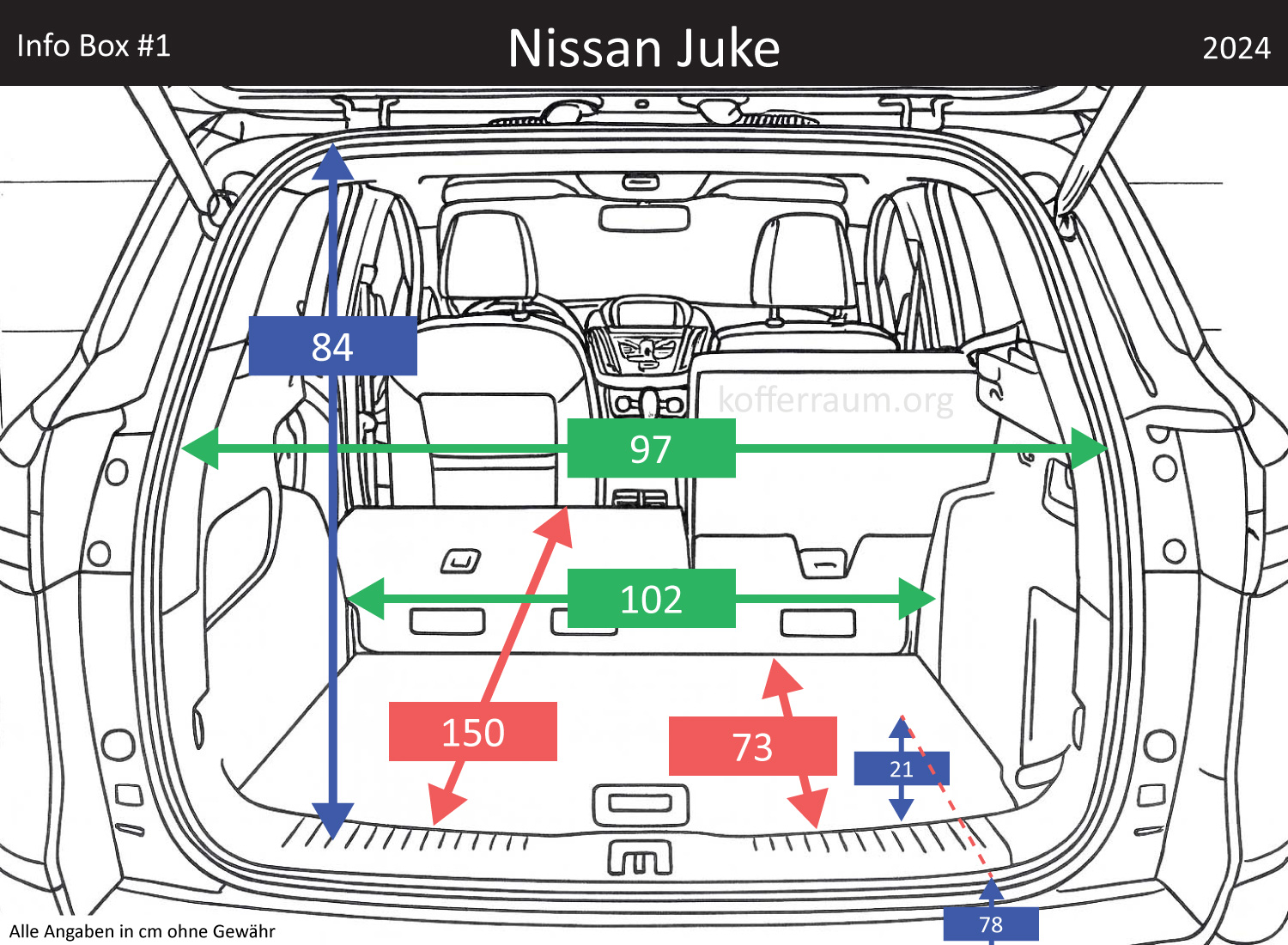
Model information
The Nissan Juke is a compact SUV that first went on sale in 2010. The latest generation of the Juke, introduced in 2020, is characterised by a distinctive design, innovative technologies and sporty driving dynamics. With a blend of efficiency and performance, the Juke appeals to a broad audience that values both urban mobility and leisure activities. The Juke offers a high driving position, providing good all-round visibility, and is equipped with modern infotainment systems.
Variants within the same range
The Nissan Juke is mainly offered as a compact SUV and is not available in different body styles such as a saloon or cabriolet. However, there are various trim levels that differ in terms of engine options, equipment and design. These variants are important to cater to the different needs of buyers, but the basic form of the Juke as an SUV remains unchanged.
Generational differences
The first generation of the Nissan Juke was produced from 2010 to 2019. In 2019, the model underwent a fundamental revision, which affected the body dimensions and boot capacity. The new generation offers more interior space and improved ergonomics, which also affects boot space. The changes in the second generation are significant, as they address the needs of modern buyers who expect more storage space and flexibility.
Direct rivals
In the same price class and size as the Nissan Juke, models such as the Ford Puma and the Peugeot 2008 can be found. The Ford Puma offers a boot capacity of around 456 litres, making it slightly roomier than the Juke. The Peugeot 2008, on the other hand, has a boot capacity of around 434 litres. These differences in boot capacity can be decisive for buyers who need a lot of storage space.
More affordable alternatives
More affordable alternatives to the Nissan Juke with similar boot dimensions include models such as the Dacia Duster and the Skoda Kamiq. The Dacia Duster offers a boot capacity of around 478 litres, while the Skoda Kamiq provides around 400 litres. Both models are generally cheaper to buy and still offer a good level of practicality and storage, making them attractive alternatives.
All information on this site is provided without warranty, and no liability is accepted for its accuracy or completeness.