
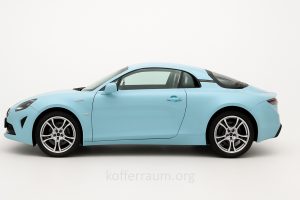
Alpine is more than a carmaker; it is a name that has long stood for lightness, precise handling and a direct link to racing. Across decades, Alpine has offered small, focussed sports cars that reward the attentive driver and recall a time when performance came from balance rather than bulk.
Founded in 1955 by Jean Rédélé, Alpine began in Dieppe with a mission: to build fast cars that did not carry excessive weight. The early cars were purpose‑built and affordable, designed to conquer rallies and hill climbs as much as circuit tracks. The philosophy was simple: strip away unnecessary mass, tune the chassis for balance, and let the driver feel every turn. The result was a discipline that fused clever engineering with a driver’s touch, yielding machines that felt both light on their feet and honest to drive.
Perhaps no model embodies that ethos better than the A110 Berlinette of the 1960s and early 1970s. Light, nimble and aerodynamically clean, it won customers with its agility and driven feel. It could be coaxed to race pace on a back road and still remain civil enough for everyday use. The Berlinette cemented Alpine’s reputation as a marque that could deliver real performance on a modest budget, and it inspired a lineage that enthusiasts still celebrate today.
From the late 1970s and into the 1980s, Alpine extended its talent into endurance racing with the A442 and its variants. The cars carried the brand’s lightweight principles into the Le Mans arena and earned multiple victories, reinforcing Alpine’s legend among fans and rivals alike. Yet market shifts and corporate restructuring eventually left the company dormant for a period, as the automotive world moved toward bigger, more generalist brands. The name endured, however, as a talisman of purist sportscar philosophy.
Then, in 2017, Renault revived the Alpine name with a dedicated model that could reintroduce the brand to new and old fans alike. The A110 arrived as a mid‑engined, rear‑wheel‑drive two‑seater built around a lightweight aluminium structure. Its styling nods to the 1960s original while embracing modern aerodynamics, materials and safety technologies. The car quickly earned praise for its balance, finely tuned steering and the sense that you are connected to the road rather than to a computer. It is a modern reinterpretation rather than a retro revival, retaining Alpine’s essential promise: driving pleasure through lightness.
Today’s range is compact but well formed: the A110 in its standard guise and a higher‑performance S version, both designed to prioritise grip and feedback over sheer power. The engine is a turbocharged four‑cylinder, paired with a chassis that keeps weight to a minimum. The result is a car that rewards the eager driver with a precise front end, lively mid‑corner balance and a willingness to change direction as soon as you ask. Inside, Alpine keeps things pared‑back and tactile, with a cockpit that favours function over flash and a colour palette that often includes the brand’s distinctive blue and white‑red accents.
Looking forward, Alpine will continue to tread lightly—small production runs, a clear identity and a strong motorsport heritage as its north star. Electrification will appear in time, but the marque’s promise is not speed at any cost; it is a human‑scale, communicative driving experience. If that balance endures, Alpine will remain not merely a badge, but a way of driving.