
Average Convertible Boot Dimensions in cm
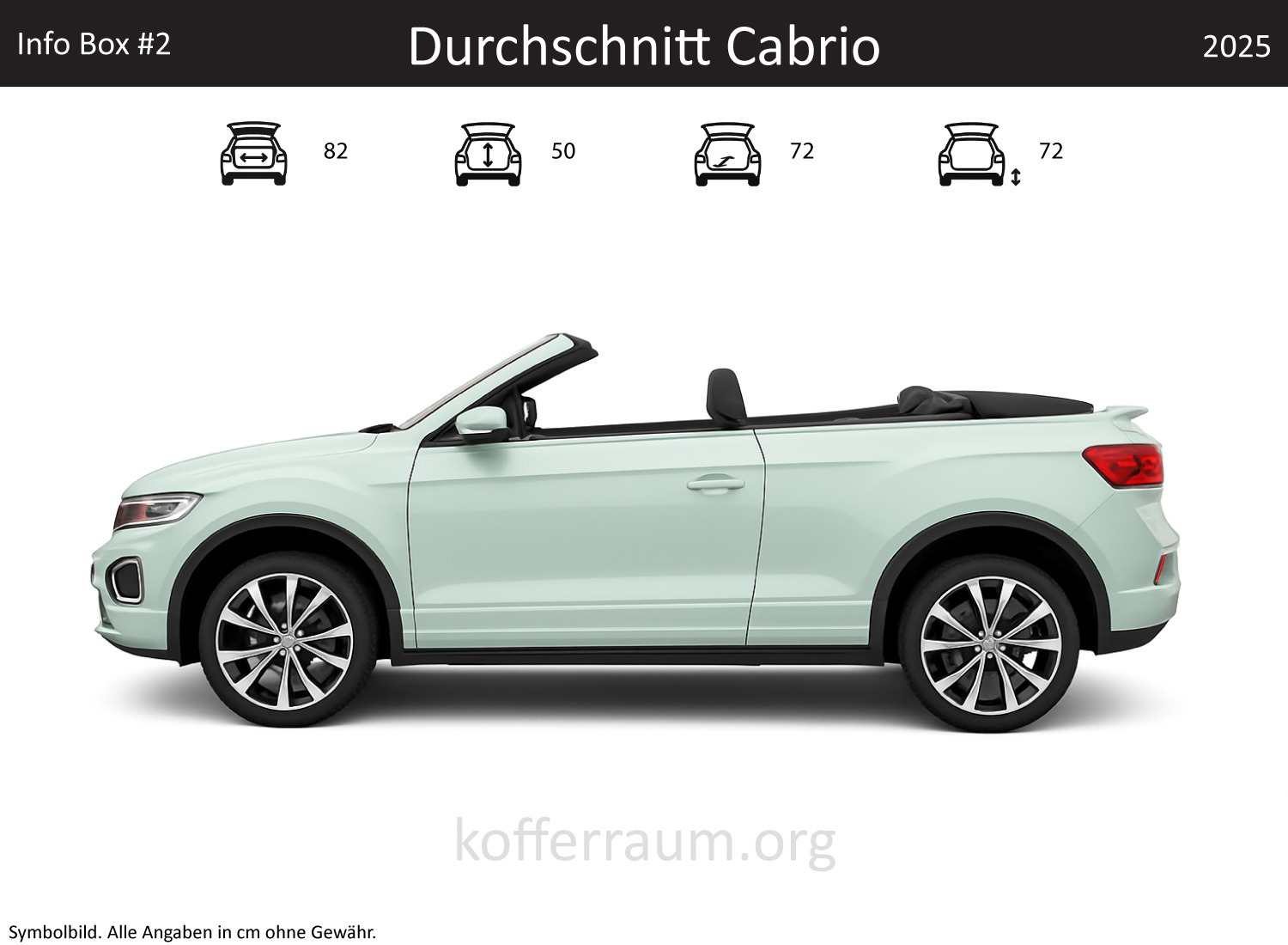
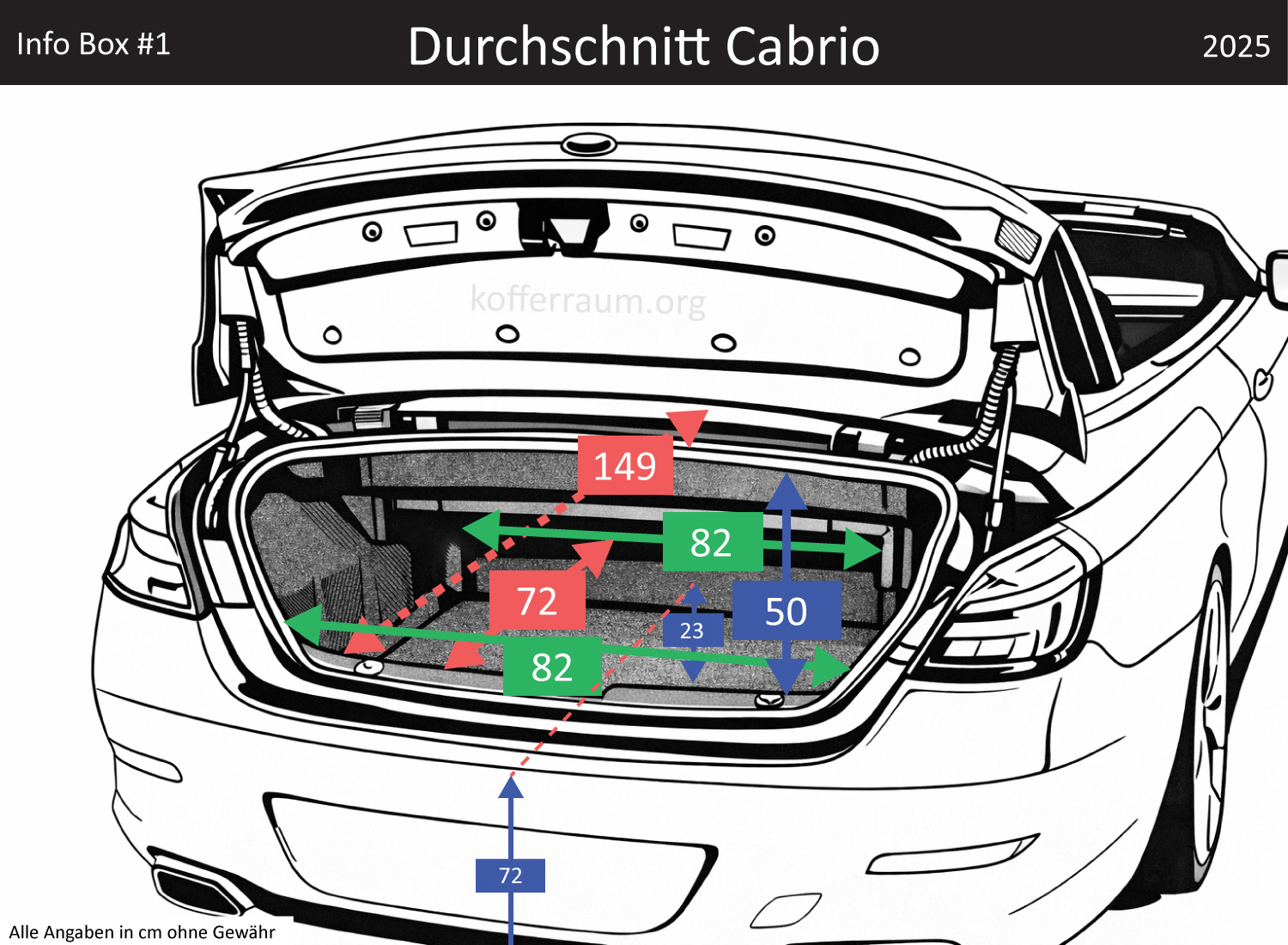
Vehicle Type
A convertible is a passenger car with a roof that is at least partly removable or retractable, enabling open-top motoring. The body styles range from small roadsters (two-seaters) through 2+2 sport coupes to four-door convertibles based on saloon platforms. Technically the type is characterised by reinforced bodyshell members or additional cross-members to compensate for the torsional rigidity lost when the fixed roof is removed. The roof construction – fabric roof or metal, electrically retractable hardtop – significantly affects weight, space requirements and thereby the boot space.
Variants
With convertibles there are variants that differ markedly in boot volume. The most important variants include: soft-top convertibles with fabric roofs that fold the roof away compactly and therefore often offer more storage space; convertibles with a folding metal or plastic hardtop that require more space for the roof when retracted and thus reduce boot capacity more; as well as fixed Targa- or roadster-style variants, which in turn present different compromises in storage and construction. In addition, seating configuration (two seats vs. 2+2) and vehicle class (city car to luxury grand tourer) influence boot size: small sports cars typically have smaller boots than four-seat convertibles on mid-range platforms.
Boot capacity
The boot of an average convertible is defined by several characteristic features: irregular shapes, limited height and volume losses due to the roof mechanism. Typical volume ranges are broad: roadsters and small two-seaters usually sit in the lower range, more compact 2+2 models in the middle range, and larger convertibles or grand tourers offer correspondingly more space. When folding the roof, the roof structure – especially with rigid-folding hardtops – often occupies a significant part of the load volume, so the usable volume varies greatly depending on the roof position.
Practically this means: boot shapes are often flat and wide, which makes bulky, tall luggage hard to accommodate; long, flat items can be stored more sensibly. Many manufacturers offer split-folding rear seats, through-loading facilities or removable tonneau covers to increase flexibility. Equipment items such as luggage nets, tie-down points, removable shelf boards or separate storage pockets for the roof are common to improve usability. Payload limits and the weight of the roof should be considered when loading; some models require the boot to be empty or certain areas to be kept clear when folding the roof away.
History
The development of the convertible has progressed from simple, lightweight roof solutions to technically complex, fully automatic systems. Early convertibles were usually fabric tops on open-bodied chassis; with the advance of mass production, comfort-oriented variants with fixed rear ends and better weather protection options emerged. In the 1990s and 2000s, electric hardtops became common, offering coupé-level roof comfort but at the cost of boot space. Parallel to them, light soft-tops remained popular because they take up less volume and are cheaper. Modern cabriolet models integrate reinforced floors and optimised roof compartments to reduce the compromise between open-top motoring and practicality. Safety technology such as rollover protection, reinforced A-pillars and side-impact protection also affected space distribution and weight.
Classics
Among the well-known and often regarded as “classic” convertibles are sports cars such as the Mazda MX-5 (Miata), long recognised as a benchmark for pure roadster fun, as well as historic models like the Mercedes SL, the Porsche 911 Cabriolet and classic British cars such as MG or Triumph sports cars. Similarly, coupé-based convertibles from BMW (e.g., 3 Series Convertible), Audi (A5 Cabriolet) and Mercedes (C- or E-Class Cabriolet) are among the common representatives offering a blend of everyday practicality and open-top driving. These classics show different approaches to boot-space design: small roadsters are more minimalist, while premium convertibles offer larger, but split-load storage areas.
More affordable models
Cheaper entry points into the world of convertibles are often small city and entry-level models with fabric roofs, or older used cars: examples include compact convertibles such as the Fiat 500C, older MINI Convertible generations or more affordable models from Peugeot, Renault and Ford from earlier model ranges. Used-car markets also offer numerous older roadsters and compact convertibles that are affordable, but depending on condition and mechanicals involve greater compromises in comfort or water-tightness. For budget purchases, pay special attention to the condition of the roof, the functionality of the mechanics and the practical boot condition, as these features strongly affect comfort and usefulness.
All information on this site is provided without warranty, and no liability is accepted for its accuracy or completeness.