
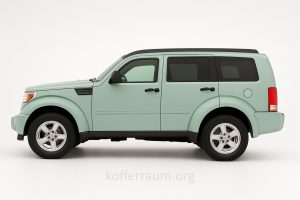
Few brands command the theatre of the American automotive scene quite like Dodge. Born out of the engineering grit of the Dodge brothers in 1914, the marque quickly established a clear identity: practical performance, rugged reliability and, above all, a sense of drama. For more than a century, Dodge has played the role of “showman” as much as it has that of a practical transport solution, and that duality remains its charm today.
The brand’s mid‑century heyday is inseparable from the muscle-car era. The 1960s and early 1970s turned Dodge into a byword for raw power, loud exhaust notes and bold styling. The Charger, introduced in 1966, became a page in the rulebook of performance, a four-door muscle car that offered both presence and pace. The Challenger, launched a few years later, layered even more drama onto the formula with its sculpted lines and air of theatre at the traffic lights. Then there were the road-hugging, time-stretched monsters like the V‑code Road Runner and the Super Bee, all of which helped cement dodge as the carmaker that could turn a daily drive into a weekend grand tour. The soundtrack of Dodge—an unmistakable V8 burble—became one of the brand’s strongest calling cards.
In the decades that followed, Dodge continued to push the boundaries of performance. The Dodge Viper, arriving in the 1990s, was a purpose-built supercar that demanded precision and respect. It reinforced Dodge’s reputation for engineering bravery, delivering high-revving power and a precision‑driven chassis that appealed to enthusiasts who valued purity of experience. At the same time, the brand diversified its portfolio with more everyday performance machines—the Dart, the Neon, and later, modern iterations that could blend daily practicality with weekend thrills. The SRT (Street and Racing Technology) division became a badge of merit, representing a dedication to pushing horsepower while refining handling, braking and driver feedback.
Design language has always been a shorthand for Dodge’s promise: bold, unapologetic, and designed to turn heads. The brand’s front ends—often characterised by strong, confident grilles and wide stances—speak to a consumer who wants drama at a standstill and action beyond the speed limit. Inside, the emphasis is on the driver’s experience: straightforward controls, tactile materials and a cockpit that keeps the focus on the road and the road ahead. And outside it, a vibrant Mopar culture thrives: clubs, events and a community drawn together by the shared love of performance, noise and colour.
Today, Dodge stands at an interesting crossroads. Part of the Stellantis family, the marque leans into its legendary heritage while charting a future that acknowledges modern efficiency and new technologies. Its current line-up continues to celebrate large‑capacity V8s and high‑performance variants like the Hellcat, Redeye and other legacy-informed models, even as the brand explores electrified powertrains within a broader corporate roadmap. For enthusiasts, the appeal is simple: Dodge promises speed with a theatrical edge, a car that makes every drive feel like a performance. For the rest of us, it remains a reminder that automotive history is often best enjoyed in motion, with the exhaust crack and the tyres speaking the language of power.