
Hyundai Ioniq Electric Boot Dimensions in cm
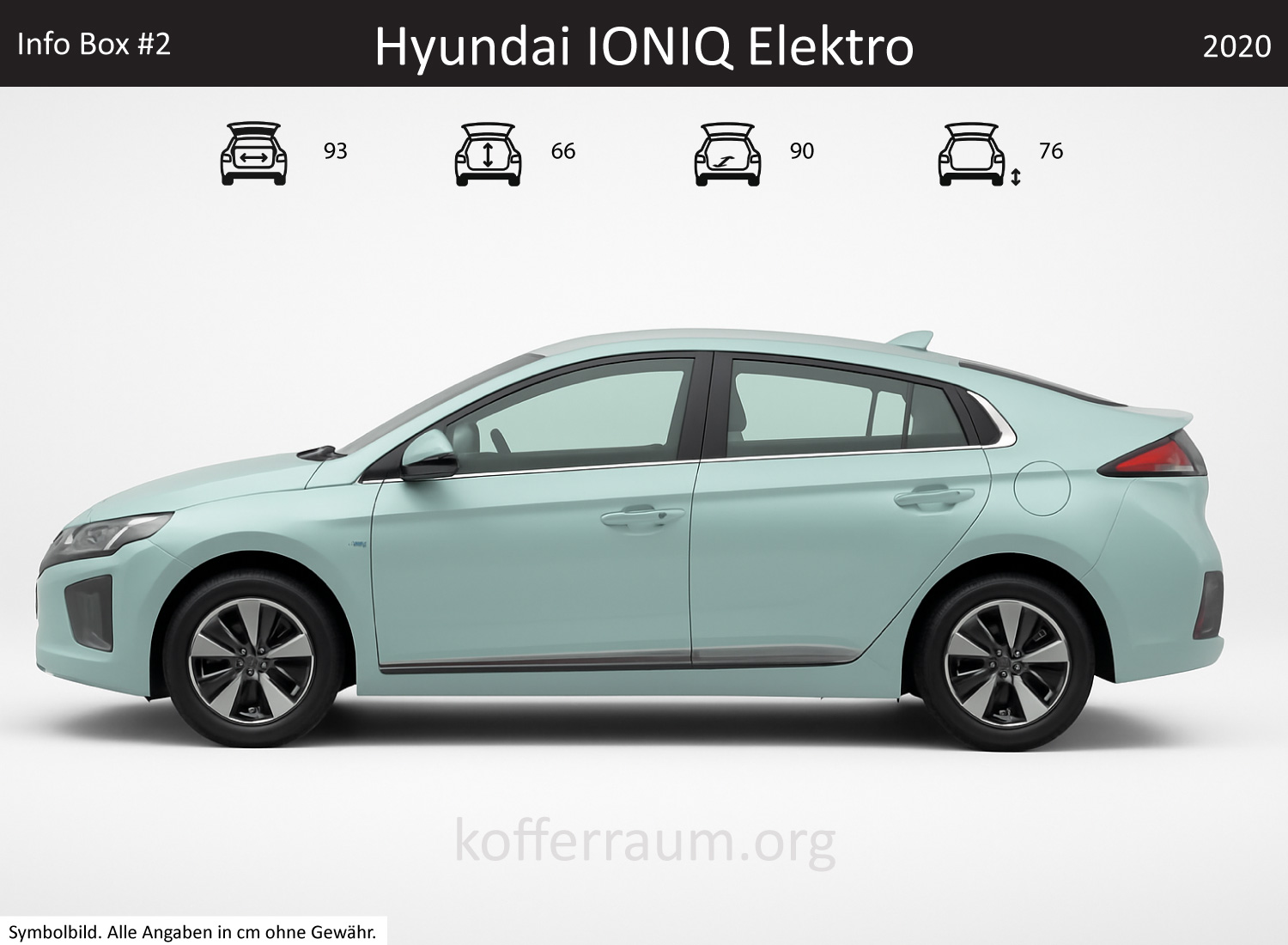
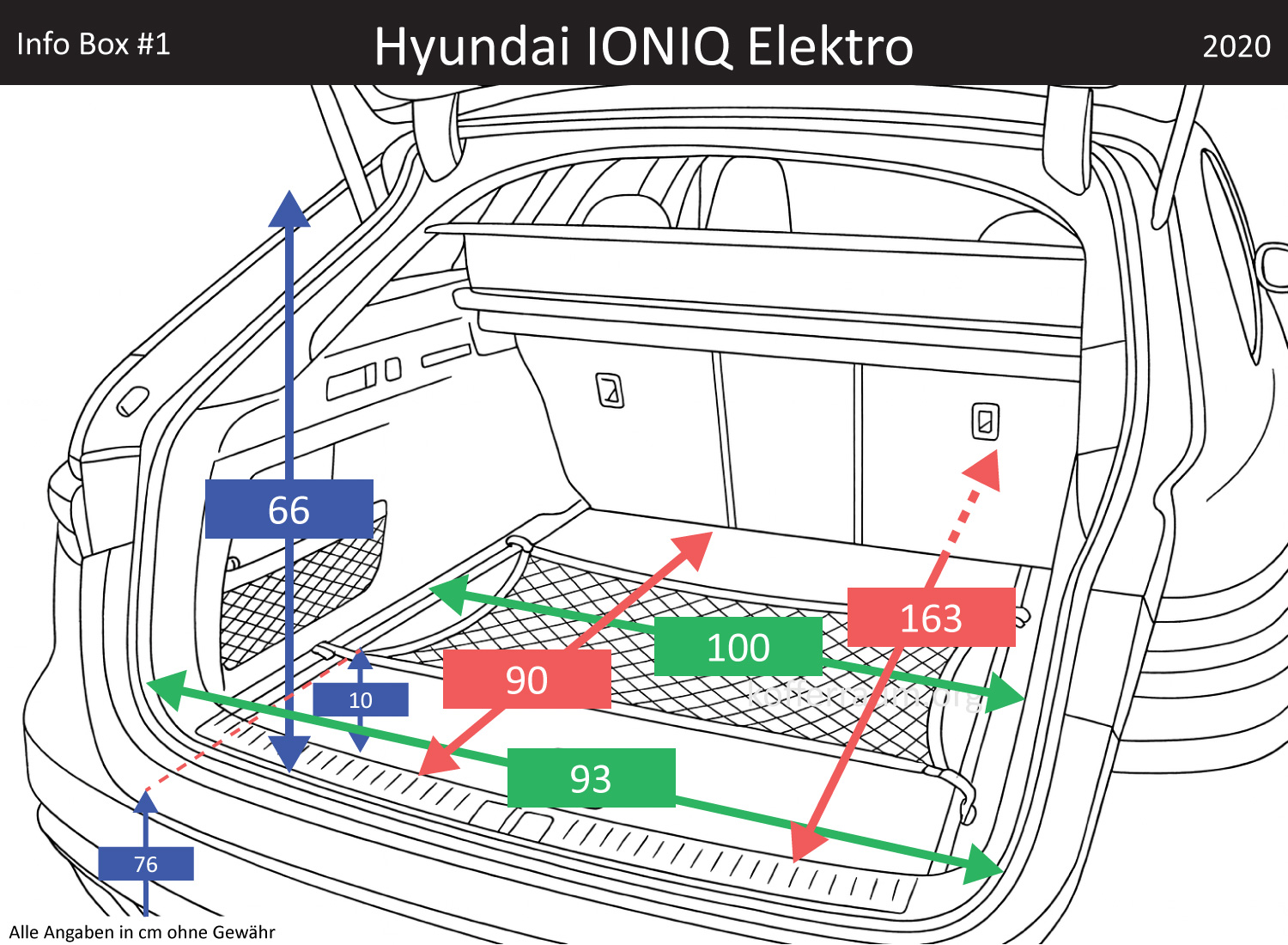
Model information
The Hyundai IONIQ Electric is a fully electric vehicle that stands out for its efficiency and environmental friendliness. The latest generation offers a combination of modern design, advanced technology and a high level of driving comfort. The IONIQ Electric is part of the IONIQ family, which also includes hybrid and plug-in hybrid variants. With a range of up to 614 km (WLTP) and a power output of 160 hp, the IONIQ Electric is designed for both urban and rural use.
Variants in the same range
The IONIQ range includes several variants, including the IONIQ Hybrid and the IONIQ Plug-in Hybrid. These models differ in their powertrain technology and the associated characteristics. The IONIQ Electric, however, is the only model in the range that is powered exclusively by electricity. It is important not to confuse the models, as they offer different ranges, powertrains and boot configurations.
Boot space
The boot capacity of the Hyundai IONIQ Electric is 350 litres, which is generous for a compact car. The rear seats fold down, allowing load space to be extended to up to 1,400 litres. This flexibility enables the transport of larger items, making the IONIQ Electric a practical choice for everyday use. In addition, the boot openings are wide and low, which makes loading easier.
Model year differences
The Hyundai IONIQ Electric was first introduced in 2016, and there have been several model updates in the following years. The most significant changes occurred in 2019 and 2021, when the body and technology were updated. These changes led to a slight adjustment to the body dimensions, but boot capacity remained essentially constant. The latest models offer improved aerodynamics and optimised interior layout, enhancing the overall impression of the vehicle.
Direct competitors
In the same price bracket and size as the Hyundai IONIQ Electric, models such as the Nissan Leaf and the Volkswagen ID.3 can be found. The Nissan Leaf offers a boot capacity of around 435 litres, giving it an advantage in this respect. The Volkswagen ID.3, on the other hand, has a boot capacity of around 385 litres. These differences can be decisive for buyers who place value on storage space.
More affordable alternatives
More affordable alternatives with similar boot dimensions are the Dacia Spring and the Renault Zoe. The Dacia Spring offers a boot capacity of around 290 litres, making it less spacious than the IONIQ Electric. The Renault Zoe, however, has a boot capacity of around 388 litres, making it an attractive option for buyers seeking good value for money. Both models are generally cheaper to buy than the IONIQ Electric.
All information on this site is provided without warranty, and no liability is accepted for its accuracy or completeness.