

Lancia is one of the more cinematic names in European motoring. Born in Turin in 1906, the marque has long prided itself on engineering audacity wrapped in restrained elegance. Its founder, Vincenzo Lancia, believed progress should show in the ride as much as in the headline figure on a brochure: a car that is both a pleasure to drive and a pleasure to own. The result is a lineage that moves from bold, engineer-led machines to everyday favourites that retain a sense of theatre.
From the Stratos to the Delta Integrale, Lancia has built a reputation for cars that feel both fast and refined. The Stratos, an outrageous mid‑engined coupé created to win rally honours, remains an icon of the 1970s: a car that looks as if it is leaning forward in approval. The Delta, in its Integrale form, became the archetype of the rally‑bred family car: four-wheel drive, turbocharged urge, and a chassis tuned for controllable exuberance. Between them, these machines established a sensibility in which performance never sacrificed engineering discipline or daily usability.
Design has always been part of Lancia’s toolkit. The brand’s cars have habitually paired sculptural lines with thoughtful proportions, a philosophy reinforced by collaborations with Italy’s leading design houses such as Zagato and Pininfarina. Even the more understated models carry a certain architectural quality: crisp lines, precise detailing, and a sense that the car’s look is less a statement and more a promise of precision. This balance—shock and restraint in the same package—remains what makes Lancia recognisable to enthusiasts and to curious newcomers alike.
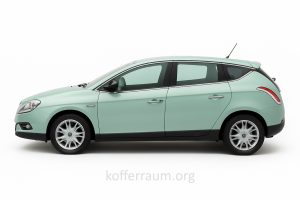
In the 21st century, Lancia encountered the upheavals that buffeted many European brands. The group’s reorganisations and market pressures reduced its scope outside Italy, and the line‑up narrowed to what many see as a quintessentially European offering: the Ypsilon, a small hatch that continues to be popular in city streets and urban garages. A revival of the Delta’s spirit appeared in concept form and in limited production, reminding observers of Lancia’s rallying heritage, even as the brand’s global footprint contracted. For many fans, the appeal today lies not in repetition but in heritage: a reminder that a car can be both a mechanical companion and a piece of living history.
For anyone who loves cars as a romance of engineering and design, Lancia remains intriguing. It is a marque that dares to be different, that can make a practical hatch feel inviting, and that keeps faith with a legacy of performance that could only have come from Italy. In an era of uniformity, Lancia still invites you to look twice, listen to the road, and choose with a touch of favour towards the uncommon. Collectors and clubs keep the flame alive, organising drives and rallies where early Fulvias and Stratos cars still perform with a clarity that newer machines rarely match. In conversations about Italian design, Lancia’s name still carries an edge of mystery and potential—the hint of what small teams can achieve when they combine bravery with care.