
MG MG3 Boot Dimensions in cm
Model information
The MG MG3 is a compact supermini, characterised by its modern design and a wide range of features. It was first introduced in 2013 and has since established itself as a popular choice for urban driving. The MG3 offers a balance of practicality, comfort and value for money. With a powerful engine and agile handling, it is ideal for urban use.
Variants in the same range
The MG3 is mainly offered as a hatchback. There are no other variants such as a saloon or a convertible within this model range, which could potentially cause confusion. The focus is clearly on the hatchback design, which combines practicality with a sporty appearance.
Boot capacity
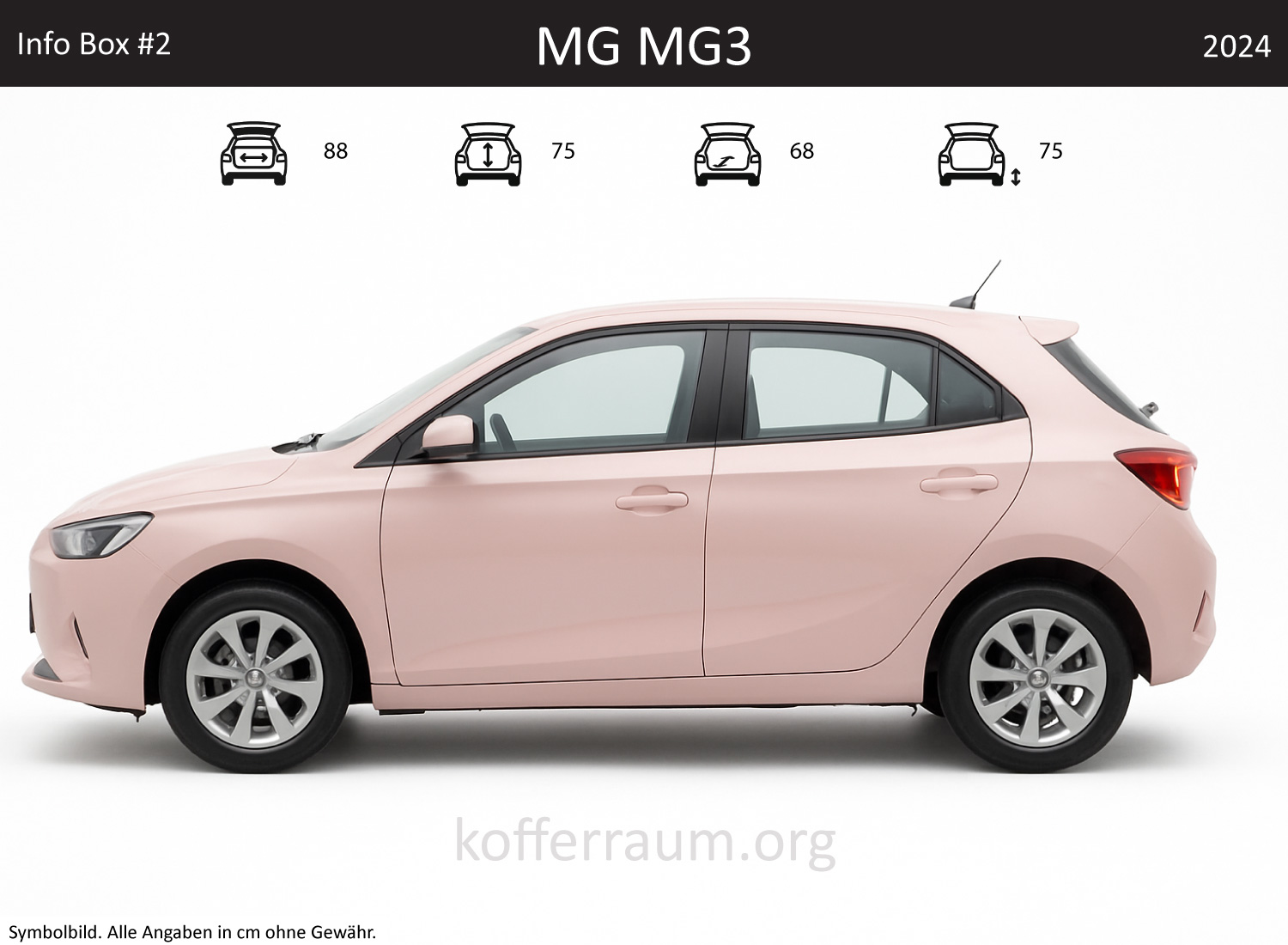
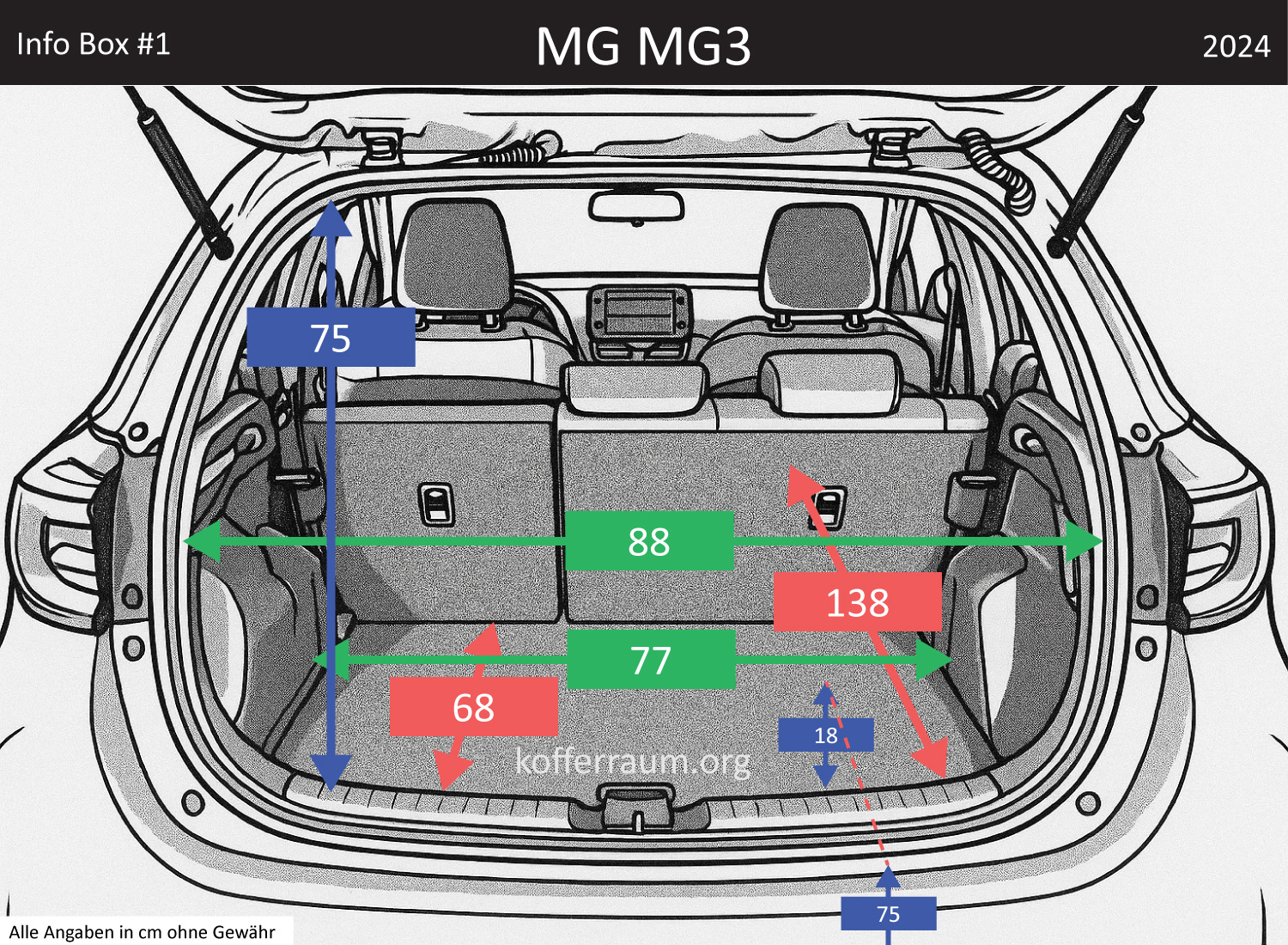
The MG3’s boot offers a capacity of around 285 litres, which is competitive for a small car in this class. The rear seats fold down to extend the load space and to transport larger items. This makes the MG3 a practical choice for everyday duties, whether shopping or leisure activities. The boot opening is also generously proportioned, helping with loading.
Model year differences
Since its launch, the MG3 has undergone several facelifts and updates that have affected the car’s dimensions and boot space. The most significant changes occurred in model years 2016 and 2020, when the design was modernised and the interior layout optimised. These changes have also led to a slight adjustment to the boot volume, with the focus on improving practicality.
Direct competition
In the same price class and size, the MG3 competes with models such as the Ford Fiesta and the Volkswagen Polo. The Ford Fiesta offers a boot capacity of around 292 litres, while the Volkswagen Polo offers around 351 litres. These differences show that the MG3, in terms of boot space, lags slightly behind its rivals, yet remains a practical solution for city drivers.
Cheaper alternatives
There are some cheaper models that offer similar boot dimensions to the MG3. These include the Dacia Sandero and the Kia Picanto. The Dacia Sandero offers a boot capacity of around 328 litres, making it an attractive option. The Kia Picanto, on the other hand, has a smaller capacity of around 255 litres, making it less suitable for larger loads. These alternatives offer different advantages that may vary depending on buyers’ individual needs.
All information on this site is provided without warranty, and no liability is accepted for its accuracy or completeness.