


Possessing a long and varied history, Mitsubishi remains a benchmark for rugged, practical driving. The Japanese marque built its reputation by marrying durability with thoughtful engineering, a combination that has served families and adventurers across continents. In British eyes, Mitsubishi cars are steps outside the ordinary—reliable workhorses that can double as weekend explorers.
Mitsubishi began life as part of the Mitsubishi zaibatsu and produced its first passenger car, the Model A, in 1917. From there the company refined compact engineering and, crucially, four-wheel drive technology. The Pajero, launched in 1982, cemented Mitsubishi’s off-road credentials. Known in some markets as the Montero, the Pajero offered a rugged chassis, a generous interior and pioneering four-wheel drive settings that appealed to challenge-seekers and family users alike.
The 1990s and early 2000s brought performance and rallying prowess with the Lancer Evolution. A monde of WRC credentials and street-going performance helped define Mitsubishi’s sporty side, even as the brand remained rooted in utility. Simultaneously Mitsubishi broadened its appeal with the L200 pickup, a workhorse that earned respect in trades, farms and leisure pursuits across Europe.
On the technology front, Mitsubishi contributed notable innovations in all-wheel-drive control. The brand’s Super Select 4WD system enabled drivers to switch between high- and low-range modes with ease, while newer platforms integrated stability and torque management through S-AWC, a holistic approach to handling under varying conditions. These technologies underlined Mitsubishi’s belief that safety and capability should be inseparable from everyday usability.
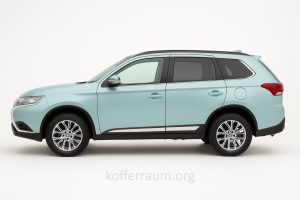
A watershed moment in recent history was the Outlander PHEV, one of the world’s first mass-market plug-in hybrids to crossover into the SUV sector. Launched in 2013-14, it combined electric driving with a petrol range extender, delivering a real-world electric drive for many buyers and helping popularise electrified mobility in Europe. The Outlander PHEV remains a reference point for practical, user-friendly electrification.
In parallel, Mitsubishi’s commercial vehicle line, especially the L200, has kept faith with the original promise: tough, dependable vehicles that work as hard as their owners. The brand’s rallying heritage—multiple Dakar success stories—adds a dash of thrill to an otherwise sober portfolio.
The modern era has not been without challenge. In 2016 Mitsubishi admitted to manipulating fuel-economy tests, prompting a management restructure and a renewed focus on transparency and long-term value. Since then, the company has aligned more closely with the Renault-Nissan-Mitsubishi Alliance to share platforms, powertrains and electrification tech, while continuing to push its hallmark SUVs and pickups.
Today Mitsubishi offers a compact fusion of reliability, capability and efficiency. In a market crowded with aggressively styled crossovers, Mitsubishi’s cars stand out for their clarity of purpose: to carry you further, with less fanfare, and with a sense that you could rely on them when you need them most. For enthusiasts, Mitsubishi remains a brand that invites exploration, whether on rough tracks or quiet lanes. It blends heritage with modern efficiency, ensuring its engineers still chase practical innovation rather than trend. In short, Mitsubishi remains stubbornly reliable, with a future that respects its roots while embracing cleaner mobility.