


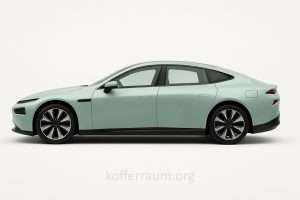
Xpeng Motors, founded in 2015 by He Xiaopeng, has established itself as one of the most recognisable names in China’s burgeoning electric-vehicle scene. Its appeal lies in a software-forward philosophy: a car that behaves like a connected device, yet remains practical for daily use. With generous equipment at competitive prices and a programme of continuous software updates, Xpeng aims to keep the car feeling new long after ownership begins. The brand’s ambition is to offer intelligent, well‑rounded EVs rather than simply the latest gadget, a strategy that resonates with buyers who want value aligned with clever engineering.
Xpeng’s line‑up spans sedans and SUVs, and it has consistently balanced range, ride comfort and technology. The P7 is a streamlined saloon designed for long journeys, notable for its aerodynamic profile and a cabin that feels contemporary without being ostentatious. The P5 extends family practicality with a slightly more premium feel, while the G3 compact SUV and the larger G9 flagship cover the more popular segments. Across the range, technology is visible: high‑resolution screens, well‑judged seating, and driver assistance features that feel increasingly capable as software evolves. The aim is to deliver a smooth, confident ownership experience rather than a flashy showroom one.
Central to Xpeng’s approach is its software stack. The car runs Xmart OS, with XPILOT driver‑assistance functions that are improved through OTA updates. In practice, this translates to easier highway cruising, smarter lane management, and more capable city driving, all while maintaining a clean, intuitive cockpit. Connectivity is designed to feel natural, with a focus on over‑the‑air improvements that refine energy efficiency, media, and navigation without requiring a trip to the dealer. Taken together, the software and hardware choices create a package that emphasises usability, resilience, and day‑to‑day practicality as the car matures with the owner.
On the international stage, Xpeng has pursued a careful but ambitious European expansion. The company has opened showrooms and service networks in several markets and has signalled plans to localise more development and supply in Europe. For buyers outside China, this translates into local regulatory alignment, more straightforward after‑sales support, and a more familiar ownership experience. Pricing remains competitive relative to rivals with similar specification, which helps Xpeng to carve out a niche among those who want advanced EV technology without the luxury price tag. The challenge is to convert curiosity into loyalty amid a crowded field of established brands.
Looking ahead, Xpeng’s prospects depend on its software maturity, battery strategy, and charging infrastructure growth. If the brand can sustain reliable build quality and deliver OTA‑driven improvements that genuinely improve daily life, it could become a familiar, mid‑market alternative for British electric‑car buyers. In a market hungry for value and technology, Xpeng’s blend of practicality, intelligent features and competitive pricing positions it as a name to watch in the coming years.