
Average Coupe Boot Dimensions in cm
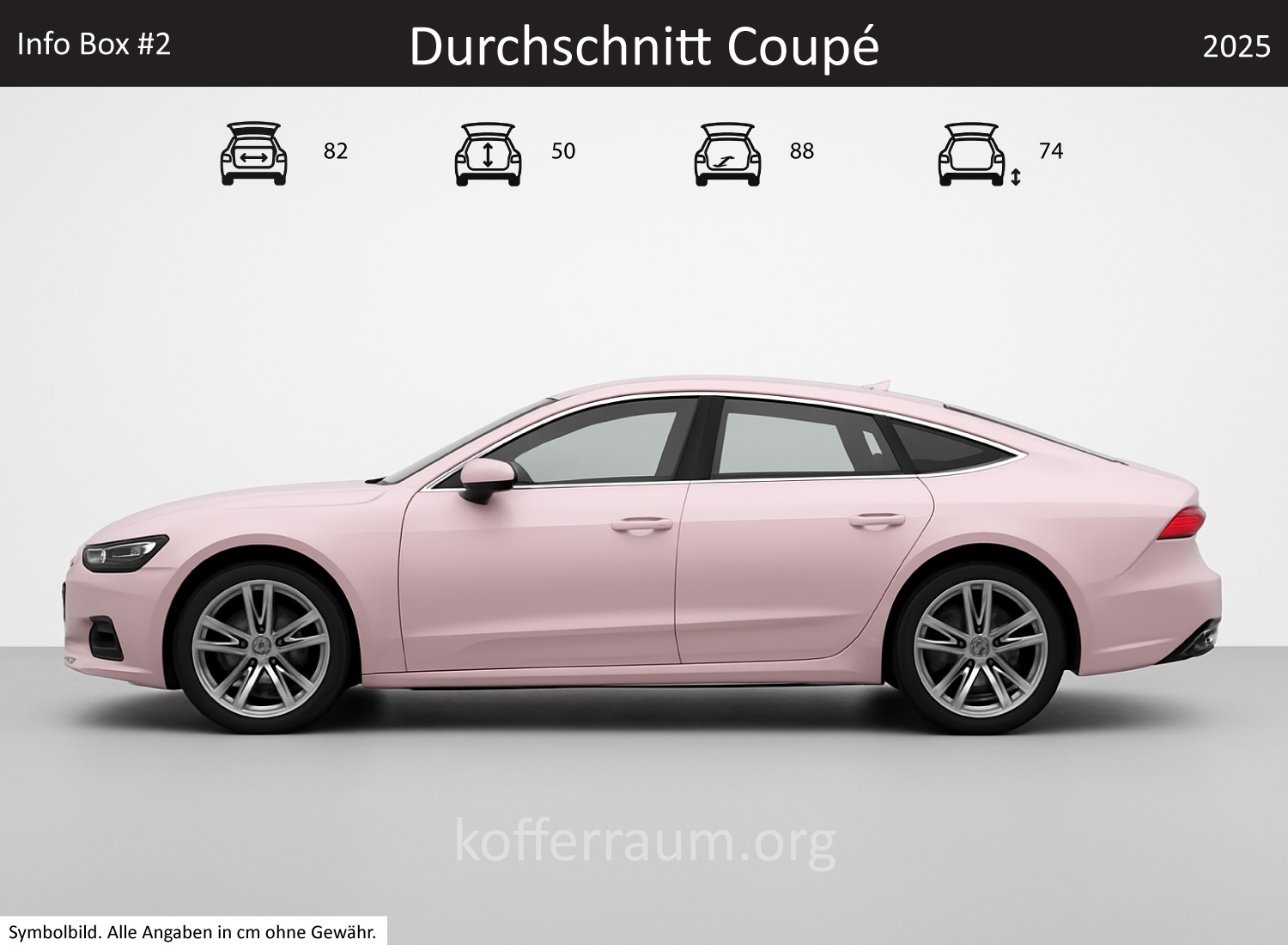
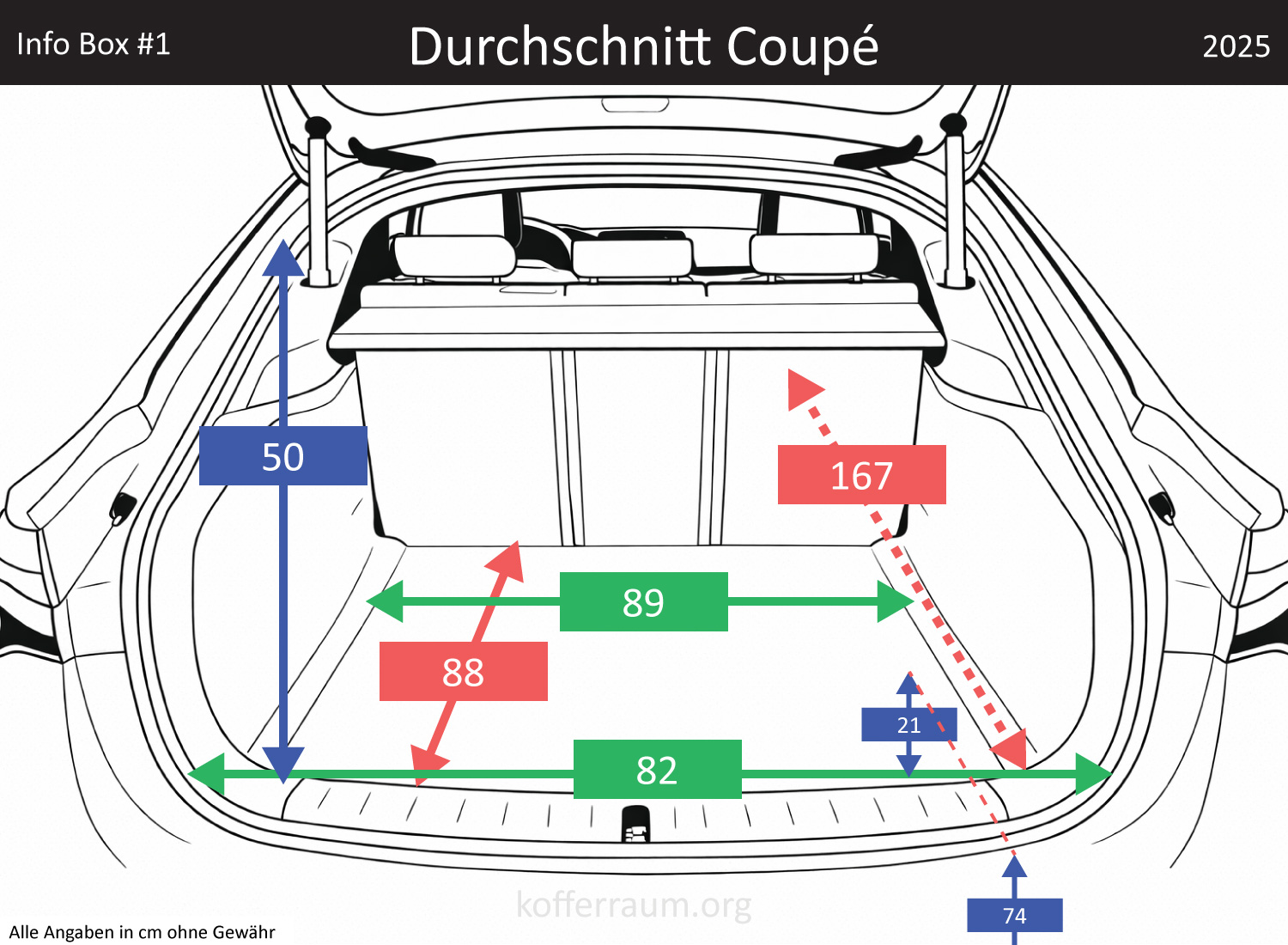
Vehicle Type
A coupé is a two-door or two-door-looking passenger car design characterised by a sporty silhouette: short overhangs, a sloping roofline and often a lower roof height than comparable saloons. Coupés exist as small, compact sport variants, as classic two-seat, two-door sports cars, or as 2+2 variants with rear seats. In everyday use, aesthetics and driving dynamics take centre stage for the coupé; the styling language therefore directly influences the interior space and, in particular, the boot space at the rear.
Variants
Coupés are not homogeneous; there are distinct variants that affect boot size and shape. For classic two-seaters and pure sports cars the boot is often small and flat. 2+2 coupés and Grand Tourers (GT) offer larger, deeper luggage spaces. Modern interpretations such as fastbacks, liftbacks or four-door “coupe” models (so-called four-door coupés) combine the coupé-style roofline with a wider rear hatch and, as a result, often better practicality. Additionally, cabriolet or roadster variants reduce the available boot volume significantly compared with the closed coupé version due to the retractable roof.
Boot Space
The boot of an average coupé is typically more restricted in shape and capacity than that of a similarly sized saloon. Characteristic features include a lower load height in the rear, a sloping loading lip and often a narrower or flatter opening, which makes loading bulky items more difficult. Boot volumes vary greatly by model type: compact sports coupés often offer only a small capacity, while larger coupés and GT models hold considerably more. Practical solutions include folding rear seats (part-folding or fully folding), through-loading for long items and, in some models, a wide-opening tailgate instead of a fixed boot lid. For everyday transport, coupés are well suited for weekend luggage, shopping bags or sports equipment; bulky or very tall cargo, however, regularly poses a challenge. Those who regularly need more load space often opt for estates, SUVs or coupé-based fastbacks.
History
The development of the coupé rear end follows the styling evolution of the type: early sports cars and classic coupés were compact with limited luggage space. With the rise of Grand Tourers and sporty saloons, practicality became more important, prompting manufacturers to incorporate more boot space and practical folding mechanisms. In recent decades, the move towards coupé-like fastbacks and four-door coupés has improved usability, as these often employ a larger rear hatch. At the same time, new constructions and materials have led to boot covers, partition nets and modular loading solutions to spread without overly diluting the sporty form. Cabriolet variants, however, remained the most compact class for boot space due to their mechanisms.
Classics
As typical coupés that exemplify different boot-space concepts, both classic sports cars and larger GT models are included. Examples across segments include iconic two-door sports cars with limited luggage space as well as well-known coupé interpretations with better everyday practicality. Such models demonstrate how varied the rear design can be in coupés: from the purist, small luggage area to the more generous storage in elegant long-haul coupés. (Concrete model examples vary by market and year of manufacture; if required I can name current or historical ranges.)
More affordable models
More affordable coupés are often found in the compact class or on the used-car market. Manufacturers have offered and continue to offer affordable two-doors with a distinctly sporty look, which are cheaper new than exclusive sportscars. In these models the boot space is often practical but smaller and less versatile than in pricier GT coupés. For budget-conscious buyers, older sports coupés, compact coupés or base-spec leisure coupés are good options if you can live with limited boot space or add extra capacity with a roof box or trailer.
If you would like concrete model names, typical volumes or examples of folding solutions, I can add more detail with differentiation by segment, year and manufacturer.
All information on this site is provided without warranty, and no liability is accepted for its accuracy or completeness.