
Average Saloon Boot Dimensions in cm
Vehicle Type
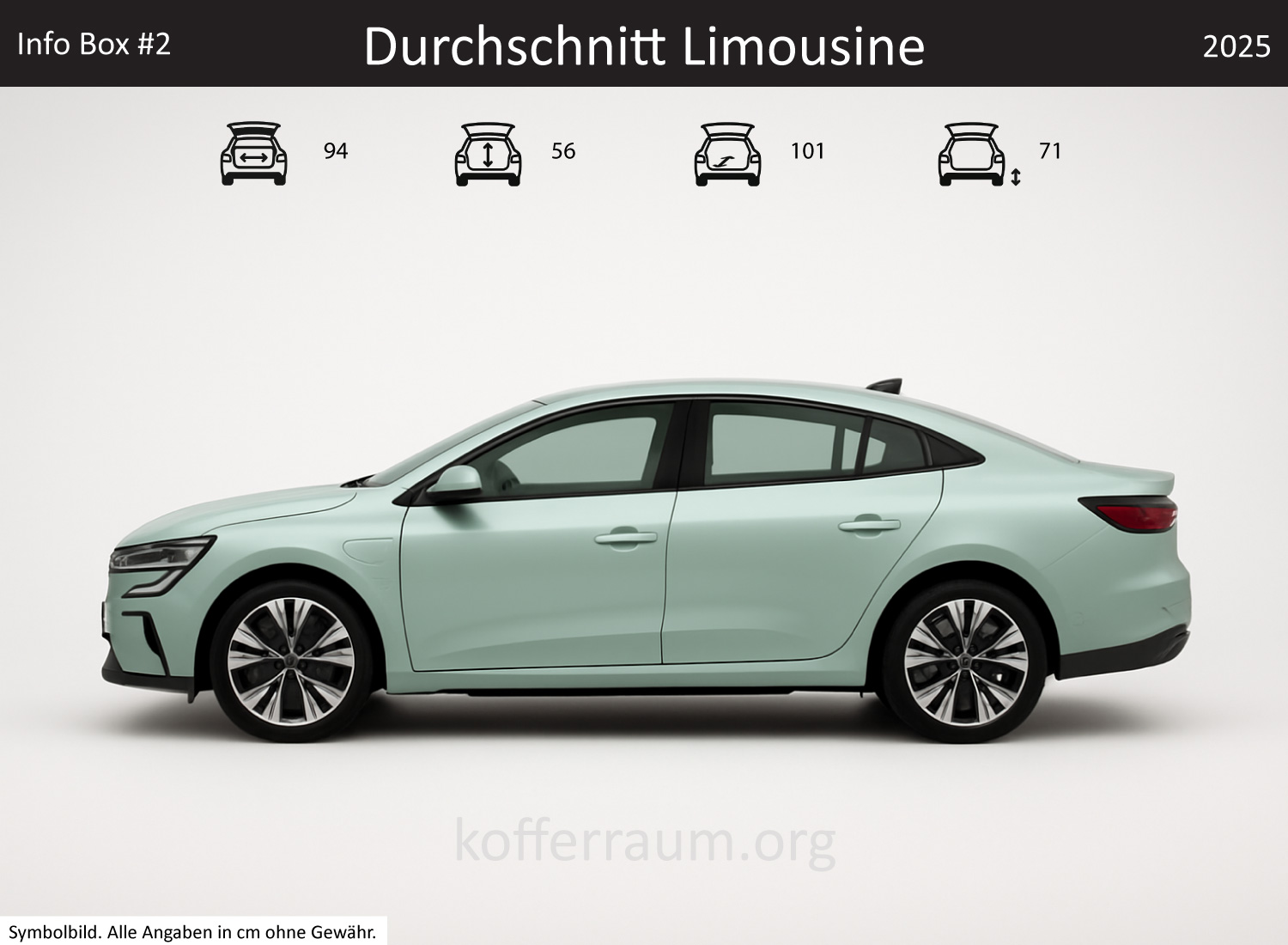
The saloon (also known as a sedan in many languages) is a body style with a clearly defined three-box design: engine bay, passenger compartment and a separate boot. Hallmarks are a fixed roof, a fixed C‑pillar and a closed tailgate that separates the load space from the passenger space. Saloon cars come in different size classes from subcompact through compact and mid-size up to premium and luxury models. Compared with estates or SUVs, saloons generally have a more pronounced separation between the passenger area and boot, which affects accessibility, shape and practicality of the load space.
Variants
Within the saloon family, variants exist with sometimes substantially different boot dimensions. Compact and subcompact saloons often have narrower and flatter boots than mid-size or premium saloons. Long-wheelbase or long-version models (e.g., for markets with higher rear-seat demand) usually shift the interior space to favour rear-passenger legroom; the boot space may be larger or unchanged, depending on the design. Sporty “fastback” or hatchback variants look visually different and can reduce usable height due to sloping rear screens. Additionally, there are models with through-loading or 40/60- or 60/40-split rear seats that markedly extend the usable loading area compared with fixed boot floors.
Boot capacity
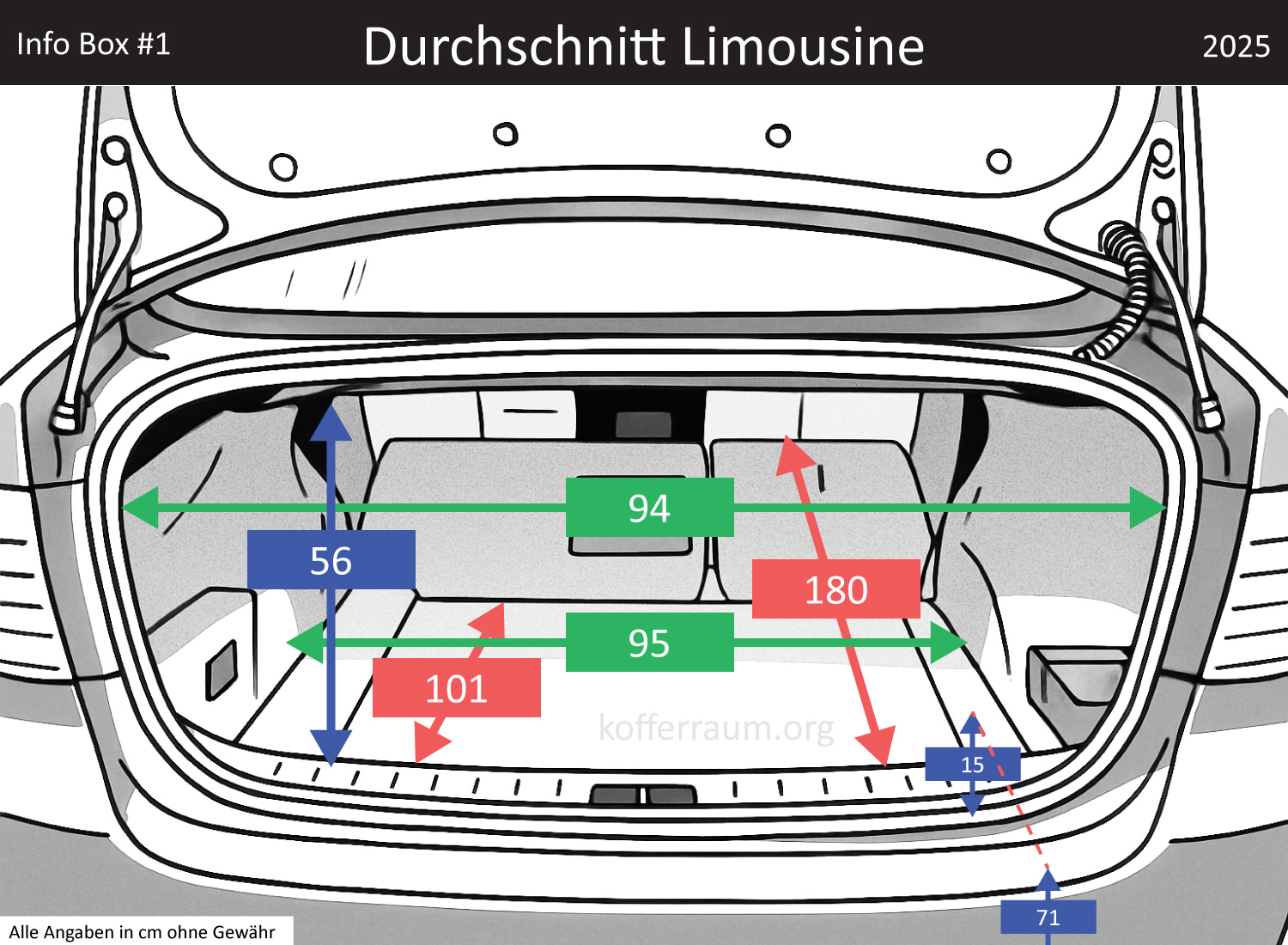
Typical saloons offer boot capacities that vary by class roughly from around 300 to 550 litres: compact saloons tend to be at the lower end, mid-size models around 400–500 litres and large premium vehicles above 500 litres. The boot is usually rectangular in plan, but its height is limited by the sloping roofline. Standard equipment may include a removable carpet or floor panel, underfloor storage for a spare wheel or tyre repair kit, tie-down points, luggage nets and a 12‑V socket. Typical transport options are suitcases (short trips: 2–4 medium suitcases), shopping bags, prams or flat-pack furniture with the seats folded. Limitations compared with estates arise for bulky or very long items: full length is limited by the fixed rear body; often longer loads are only possible with folded rear seats. Many saloons also offer a through-loading opening or ski-through for long items.
History
The saloon evolved from early body variants of the 20th century, when luggage was initially transported outside on boot racks or luggage carriers. Over the decades the boot space was integrated into the body, better sealed and largely placed beneath the rear. Technical developments affected locking and damping systems, electrically or remotely operated boot lids, interior releases for safety reasons, and the introduction of folding rear seats and modular loading floors. In more recent times lightweight construction, emission regulations and aerodynamic styling influence the shape of the rear end; in addition infotainment, safety electronics and batteries in electrified models affect space layout and underfloor volume. Parallel, demand changed: SUVs and crossovers gained market share, while saloons remain widespread particularly in certain market segments and regions.
Classics
As representative or commonly encountered saloon models for decades, ranges such as the BMW 3 Series / 5 Series, Mercedes-Benz C- and E-Class, Audi A4 / A6, Volkswagen Passat, Toyota Camry and Honda Accord have defined the segment. These models cover different market segments and reflect typical dimensions and equipment concepts: compact to mid-size saloons with a balanced mix of comfort, boot capacity and driving dynamics. Historically, models such as the Opel Rekord, Ford Taunus or older Mercedes models are considered classic representatives of their era that helped shape the type.
Budget models
In the budget segment, saloons are often more simply equipped and, to keep base price down, feature smaller engines and a more compact interior. Examples of cheaper saloons or affordable variants of the saloon form include entry-level models and market-specific versions such as the Dacia Logan, various Hyundai saloon variants (e.g., i30- and Elantra-based variants in certain markets), Kia compact saloons, Toyota Corolla in base specification, or regionally offered Renault and Skoda models. Availability and equipment vary greatly by market; those seeking maximum boot space for a small price are often best served by larger compact or C‑segment saloons with basic options.
All information on this site is provided without warranty, and no liability is accepted for its accuracy or completeness.