
Average Estate Boot Dimensions in cm
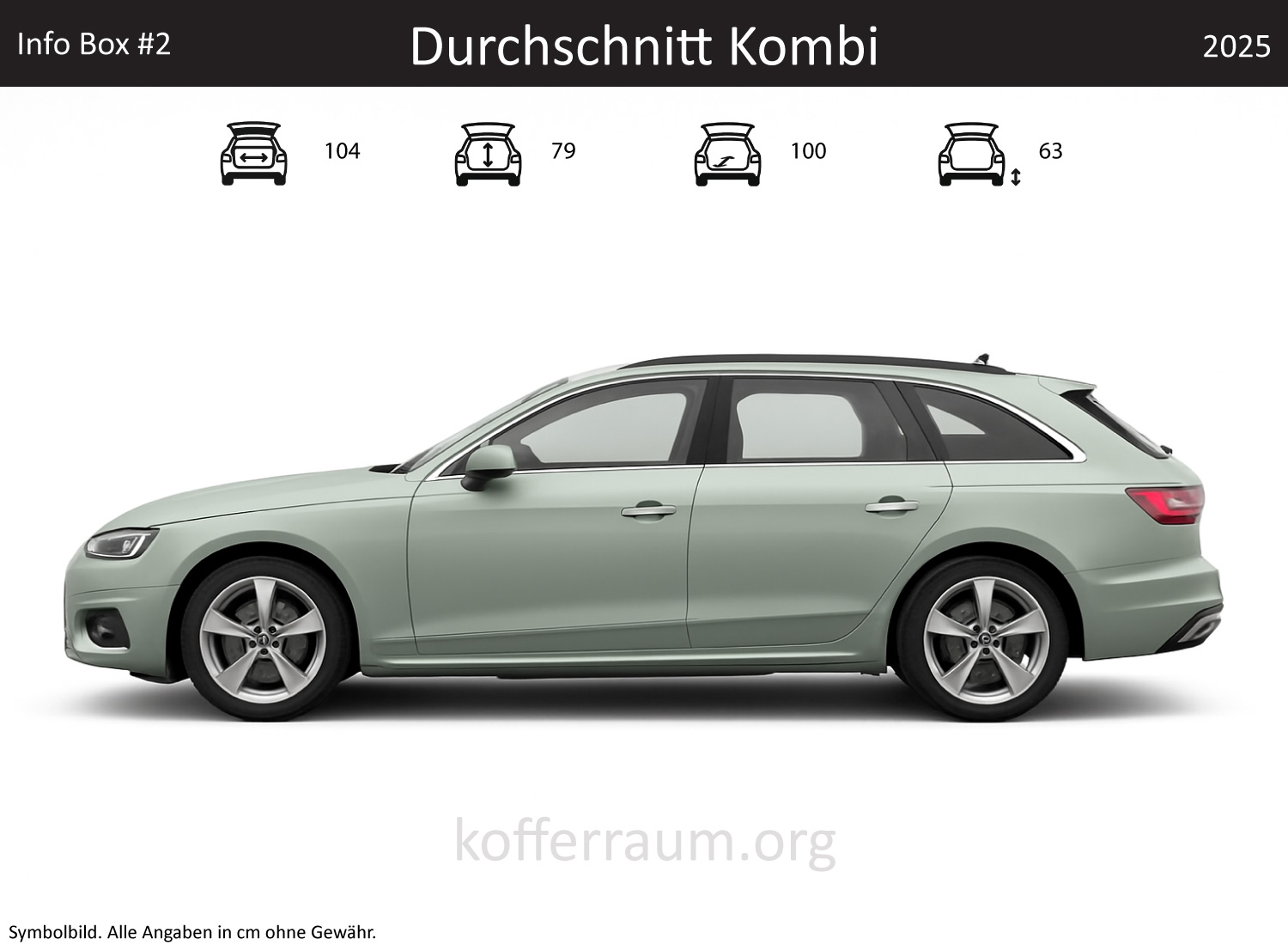
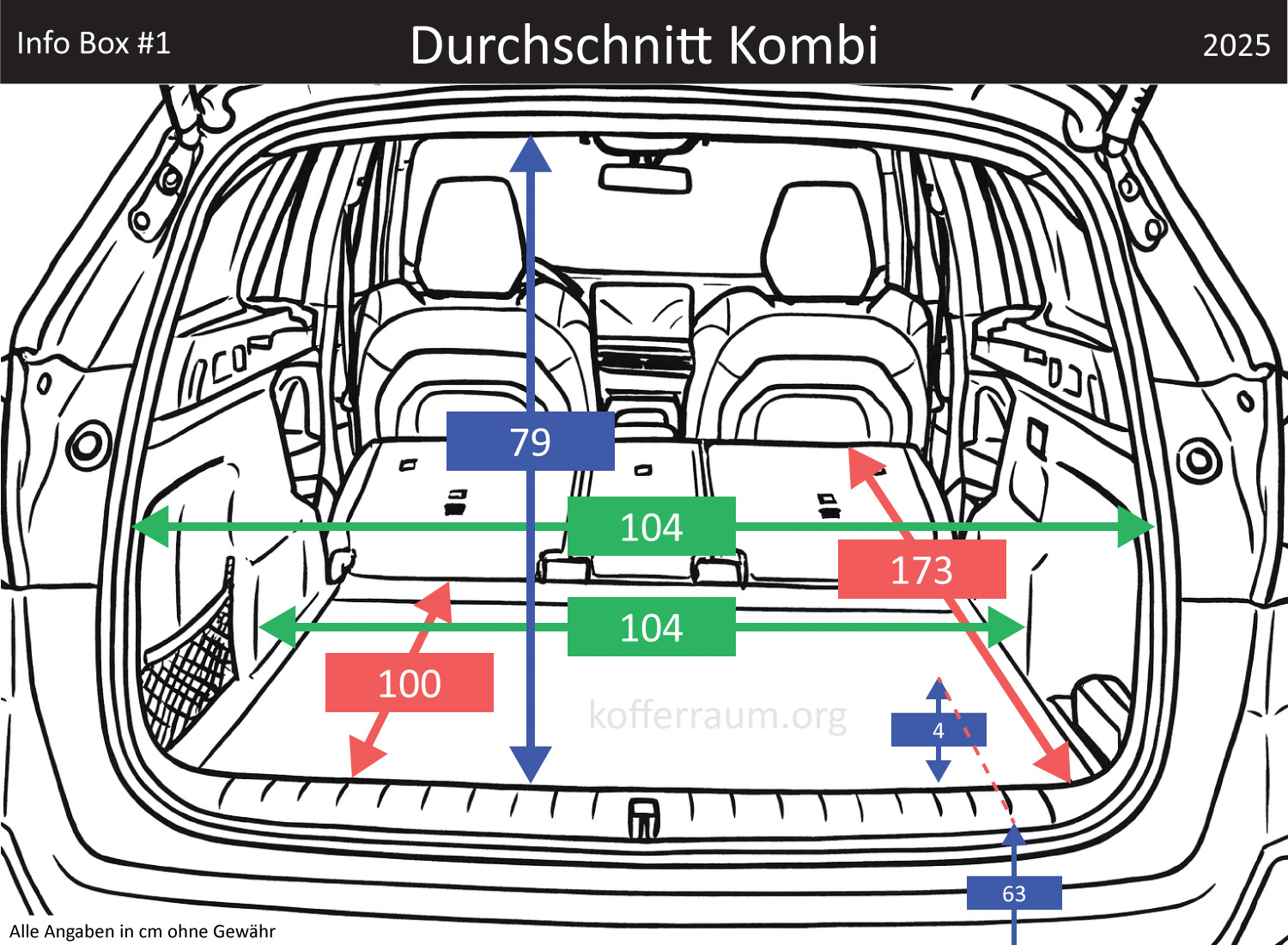
Vehicle Type
The estate (also known as Station Wagon) is a car body style with an extended roofline and a large tailgate. The aim is a flexible boot space combined with passenger transport; the vehicle offers more boot space than a saloon car with comparable driving dynamics. Estates are found across many vehicle classes, from compact family cars to the upper end of the market, and are valued by both private buyers and business users who need space and everyday practicality.
Variants
There are several variants, which differ in wheelbase, roof height and interior layout and thus result in noticeably different boot capacities. Compact estates (for example based on the Golf or Focus platforms) have smaller boot spaces; mid-range and upper-class estates offer larger boot capacity. Special variants such as “Allroad” or “All-Terrain” have increased ground clearance and often additional body cladding, which slightly reduces usable volume but increases on‑ and off-road practicality. In addition there are short-wheelbase commercial estates or long-wheelbase versions (in some marques) and vehicles with an extended wheelbase, which offer significantly more loading space. Practical special forms include estate variants with a full-width tailgate and modular seating concepts or family versions with additional luggage space under the floor.
Boot volume
The boot of an average estate is characterised by a low loading lip, a wide, lift-up tailgate and a largely rectangular shape that facilitates loading. Typical features include a removable or fold-flat luggage cover, hooks and tie-down points, a flat loading floor when the rear seats are folded, and often a storage compartment under the floor for high‑visibility vests, onboard tools or a spare wheel. Many models offer split rear seats (60/40 or 40/20/40), a continuous loading floor or a fold-down front passenger seat to transport longer items.
Volume: In compact estates boot volumes when loaded typically lie in the range of about 400–650 litres. Mid-range and upper-class models usually reach 500–700 litres. With the rear seats folded, usable volume rises significantly; ranges around 1,200–1,800 litres are common, depending on vehicle length and interior layout. Additional transport options include roof racks, roof boxes, a tow bar and optional load‑securing kits; for bulky goods, use the folded seats and through-loading options.
History
The estate developed from early utilitarian and family conversions: already in the first half of the 20th century there were practical, longer body styles. After World War II, demand for versatile family and business vehicles grew; in the 1960s and 1970s estates became standard across many model ranges. In the 1980s and 1990s manufacturers improved comfort, safety and versatility. Since the 2000s SUVs and crossovers have gained market share, but estates have remained popular in Europe because of their space, lower running costs and better handling. Modern developments include lighter materials, modular interior concepts, electrically opening tailgates and assistive loading and securing systems.
Classics
Typical, frequently cited estate models are vehicles that have been offered in their class for a long time and are known for practicality. Examples include estate variants of mid-range and premium model lines, which have undergone multiple revisions and earned broad acceptance. Typical names in this segment include long-established models from various manufacturers that are valued as family cars and company cars; they exemplify the estate principle: spacious, versatile and practical for everyday use.
More affordable models
On the market there are both new and used, budget-friendly estate options. Entry-level offers can be found with simple, compact estates with reduced equipment or from budget-conscious brands that deliberately offer affordable utilitarian variants. Used cars often provide the best value for money: older estates from the compact and mid-range classes are frequently available at moderate prices and still offer plenty of boot space. For buyers on a tight budget, consider models with simpler tech, solid cargo layouts and good spare-parts availability.
All information on this site is provided without warranty, and no liability is accepted for its accuracy or completeness.