
Average Panel van Boot Dimensions in cm
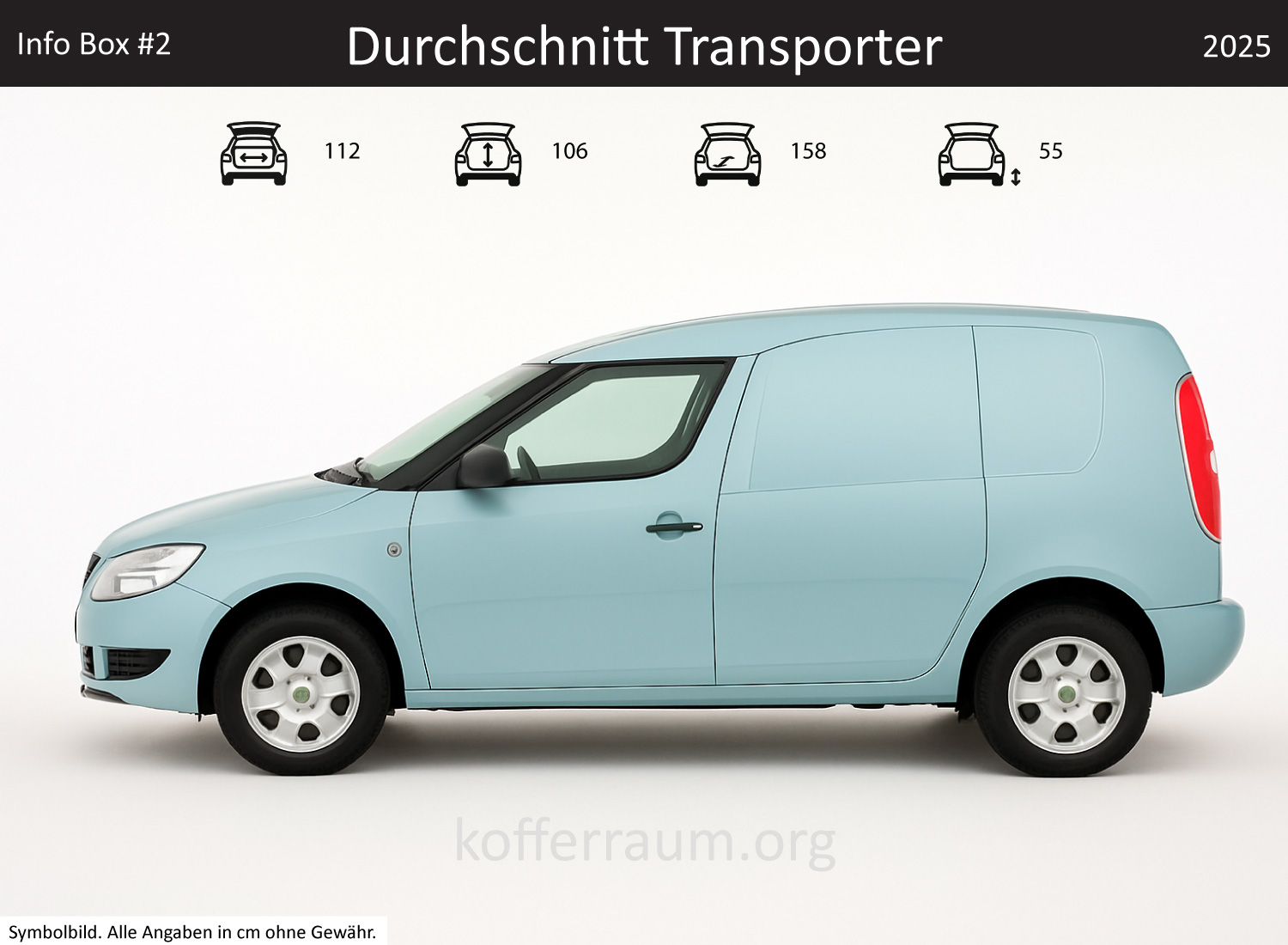
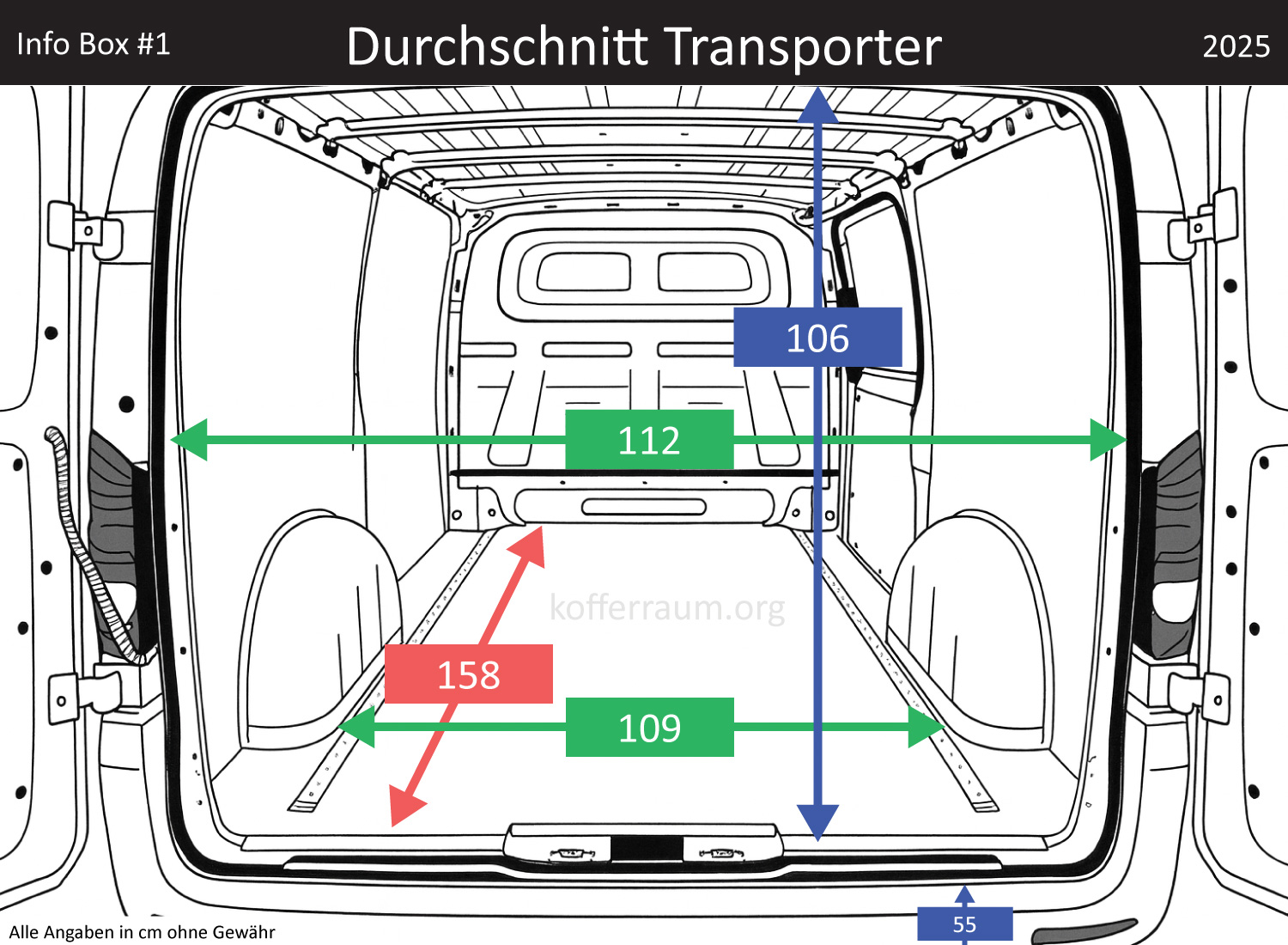
Vehicle Type
The term “average panel van” is usually understood to refer to a light commercial box van designed for commercial goods transport and small-scale deliveries in urban and regional traffic. Characteristic features include a closed load area behind the cab, a comparatively simple, robust build, as well as payload and size that lie between a passenger car and a lorry. Such vans are typically two-axle, have rear- or side-sliding doors and provide space for bulky goods, tools or pallets in a compact, nimble package. They are available in various length and height combinations to cover a wide range of transport requirements.
Variants
Within the type there are several common variants that differ markedly in load-space dimensions: short/long wheelbase (shorter or extended cargo area), low-/high-roof (low or markedly higher interior height) and panel van versus platform/flatbed. There are also combination configurations such as double cab variants with low loading height or chassis variants with individually configurable loading areas. City vans typically have smaller volumes and shorter cargo areas, while high-roof and long-wheelbase variants enlarge the cargo space significantly and allow higher loading heights. The variety of these variants has a major influence on load volume, load height, load width and usable load length.
Load volume
The cargo area of an average van is optimised for practicality: flat load floor, rugged interior lining or galvanised load floor, tie-down points, possibly tie rails and a fixed bulkhead or partition to the cab. Typical load volumes roughly range from about 3 m³ for small city vans to around 12–17 m³ for large, high-roof box vans; mid-range variants sit in the 6–9 m³ range. Load lengths range from just under 2 m up to over 4 m depending on wheelbase, with internal heights from about 1.1–2.0 m. The payload (permissible payload) is often between roughly 600 kg and 1,500 kg, varying with base vehicle and body. Practical features include a low loading lip, optional floor reinforcements, additional side or roof windows for visibility and light, and modular interior fittings such as shelving systems, tool boxes or load-security kits.
History
Light panel vans originated from early delivery vans and car-based conversions in the early to mid-20th century as commerce and trades became motorised. In the post-war era, rising commercial activity and developing logistics concepts led to specialised box vans with higher payloads and standardised dimensions. From the 1970s/1980s onward, mass production of modern, standalone transporter models took off, followed by expansion into a range of variants (length/height, payload classes). In recent decades, modularisation, safety features, improved ergonomics and stricter emissions requirements have shaped development; currently there is a clear shift toward electric drivetrains and connected fleet features that are transforming commercial vehicles in urban logistics and trades.
Classics
As typical, widely used models of this type have been in operation for decades across Europe and worldwide: the ranges from major manufacturers offering variants in many sizes and configurations. These include long-established names such as Ford Transit, Volkswagen Transporter/Caravelle in its panel van variants, Mercedes‑Benz Sprinter, and the larger Fiat/PSA Boxer models. Such vehicles have become entrenched in trades and industry thanks to the wide availability of body options, spare parts and workshop support. These “classics” cover different payload and volume segments and have produced numerous variants.
More affordable models
More affordable options can be found both in the new-vehicle sector as entry-level models of smaller ranges and in the used market. More compact vans with less basic equipment and smaller engines are cheaper to purchase; budget-segment examples include small box vans from manufacturers with low-cost model lines or brands with reduced equipment. On the used market, older examples of common models can be acquired significantly cheaper, with condition, mileage and conversions to be considered. For buyers on a tight budget, in addition to new-car special offers, certified used vehicles and simple base variants are especially advisable.
All information on this site is provided without warranty, and no liability is accepted for its accuracy or completeness.